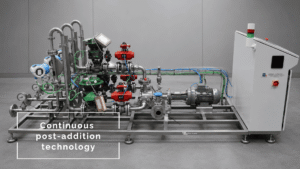

How to overcome them successfully
Blending thickening agents such as Xanthan gum or Carbopol is one of the most demanding processes in the chemical and cosmetic industry.
High concentrations, risk of lumps, phase separation or solid sedimentation are everyday obstacles that, with conventional systems, can consume hours of production time and compromise the quality of the final product.
We walk you through 𝘁𝗵𝗲 𝗳𝗶𝘃𝗲 𝗺𝗼𝘀𝘁 𝗰𝗼𝗺𝗺𝗼𝗻 𝗰𝗵𝗮𝗹𝗹𝗲𝗻𝗴𝗲𝘀 𝗮𝗻𝗱 𝗵𝗼𝘄 𝘁𝗼 𝘁𝗮𝗰𝗸𝗹𝗲 𝘁𝗵𝗲𝗺.
Mixing Xanthan gum? Carbopol? Both at the same time?
In the cosmetic industry, thickening agents are as commonplace as they are notoriously difficult to disperse. Depending on the concentrations used, the manufacturing process can become a real headache.
Imagine working with a dispersion of 5% Xanthan and 8% Carbopol. With conventional methods, achieving a homogeneous mixture can require hours of agitation in tanks.
But what if you could obtain a completely uniform, lump-free dispersion in a matter of minutes?
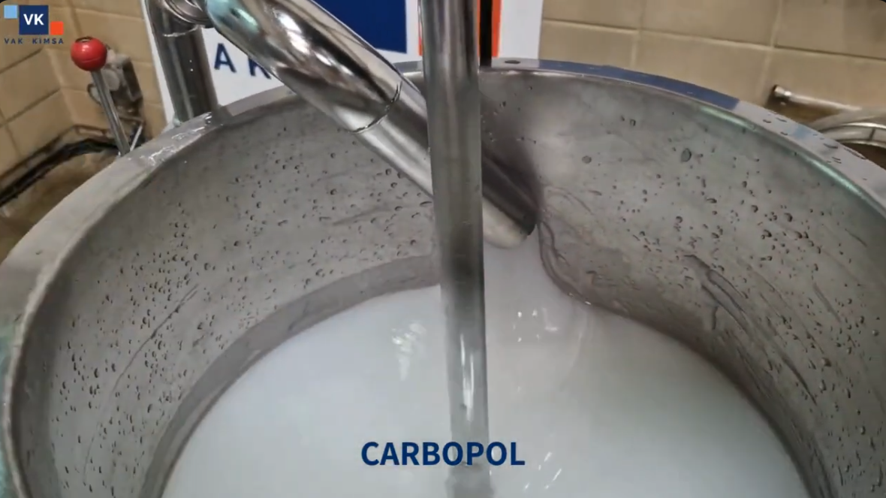
Vak Kimsa Pilot Plant – Carbopol – Mixing
The answer is VISCOVAK, Vak Kimsa’s in-line mixing solution, designed to achieve instantaneous and flawless thickener dispersions. Its two main advantages are a drastic reduction in production time while maintaining excellent quality, and the ability to work with the highest thickener concentrations on the market.
For years, VISCOVAK has transformed processes that used to take hours into operations lasting just a few minutes.
What obstacles commonly arise in the mixing of chemical products?
The mixing of chemical substances is a key procedure in numerous industrial sectors, but it is far from a straightforward operation. Differences in viscosity and density, the hygroscopicity of solids, sedimentation phenomena, or the risks associated with certain reactions mean that each process has its own specific challenges.
Below we review the five most common obstacles and how to address them.
1. Formation of agglomerates during dispersion
When powders or gums are incorporated into a liquid, it is common for clumps to form if the mixing system is inadequate or if the material addition is not managed correctly. In this case, both 𝗔𝗟𝗩𝗔𝗞 and 𝗩𝗜𝗦𝗖𝗢𝗩𝗔𝗞 offer the ideal solution: thanks to their inline mixing system, they eliminate the problems associated with improper hydration of solids.
2. Phase separation between components
When mixing ingredients with very different viscosities or densities, phases tend to segregate. To prevent this, it is necessary to adjust both the speed and type of impeller, and to consider the use of axial-flow agitators to promote homogeneity.
Xanthan gum, once properly dispersed, is a widely used component precisely because of its stabilising properties in this type of mixture.
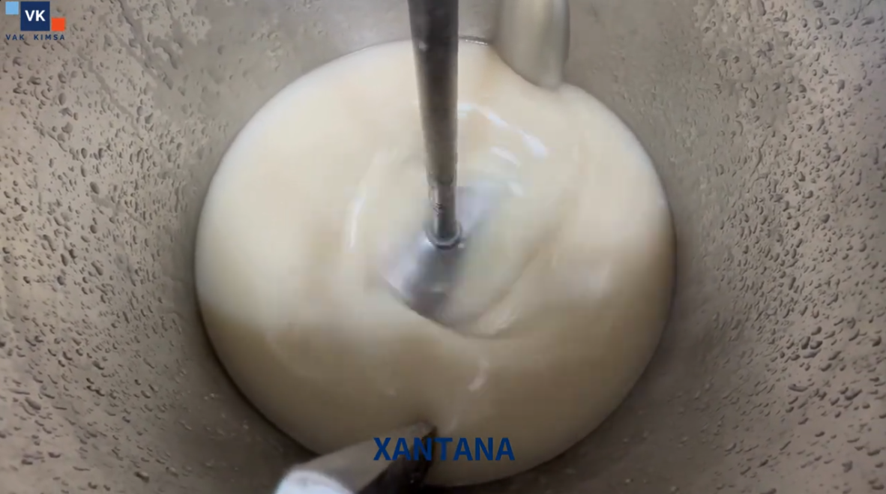
Vak Kimsa Pilot Plant – Xanthan Gum – Mixing
3. Sedimentation of solid particles
When solids are held in suspension, they frequently accumulate at the bottom of the tank. A suitable agitator operating at the correct speed will resolve this challenging process effectively.
4. Heat transfer difficulties
Dead zones and hot spots within the reactor can cause reactivity or stability issues in the formulation. The solution lies in designing an agitation system that promotes uniform fluid circulation and in upgrading the heat exchange equipment.
5. Unwanted reactions caused by excessive shear
Some formulations are particularly sensitive to shear stress and may undergo alterations in their chemical or physical structure if excessive mechanical force is applied. In these cases, low-shear impellers should be used and the motor speed calibrated according to the specific characteristics of the product.
𝗘𝗮𝗰𝗵 𝗽𝗿𝗼𝗰𝗲𝘀𝘀 𝗶𝘀 𝘂𝗻𝗶𝗾𝘂𝗲: 𝗽𝗿𝗶𝗼𝗿 𝗮𝗻𝗮𝗹𝘆𝘀𝗶𝘀 𝗶𝘀 𝗲𝘀𝘀𝗲𝗻𝘁𝗶𝗮𝗹
As can be seen, overcoming the challenges of industrial mixing does not depend on a magic formula, but on a thorough analysis of the process before designing the solution. There is no one-size-fits-all answer: each case requires its own approach.
𝗪𝗲 𝗮𝗿𝗲 𝘀𝗽𝗲𝗰𝗶𝗮𝗹𝗶𝘀𝘁𝘀 𝗶𝗻 𝗺𝗶𝘅𝗶𝗻𝗴 𝘀𝗼𝗹𝘂𝘁𝗶𝗼𝗻𝘀 and no challenge is too great for us -nor should it be for you. Get in touch with us; we will be delighted to help!