
Continuous post-addition: a new way of understanding liquid product manufacturing
Every finished-product tank means one more cleaning cycle. What if you needed far fewer? Your plant may not need one tank for every SKU: a single 1,000-litre concentrate tank can generate up to 40,000 litres of final product.
For many years, liquid product manufacturing has been based on a batch production model: each formula is prepared in a tank, all the components are mixed, the finished product is stored and then transferred to the packaging line.
This model remains a valid solution for many applications. But when a plant has to manufacture more and more SKUs, adapt to frequent formulation changes or reduce downtime, 𝗻𝗲𝘄 𝗰𝗵𝗮𝗹𝗹𝗲𝗻𝗴𝗲𝘀 𝗮𝗽𝗽𝗲𝗮𝗿:
• Multiple tanks dedicated to different products.
• Greater use of floor space in the factory.
• More cleaning operations.
• Less flexibility in the face of changes in demand.
Faced with this reality, 𝗰𝗼𝗻𝘁𝗶𝗻𝘂𝗼𝘂𝘀 𝗽𝗼𝘀𝘁-𝗮𝗱𝗱𝗶𝘁𝗶𝗼𝗻 proposes a new way of manufacturing: separating the preparation of the common base from the final customisation of the product.
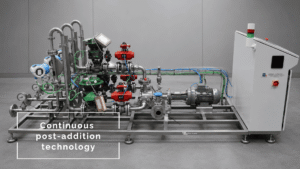
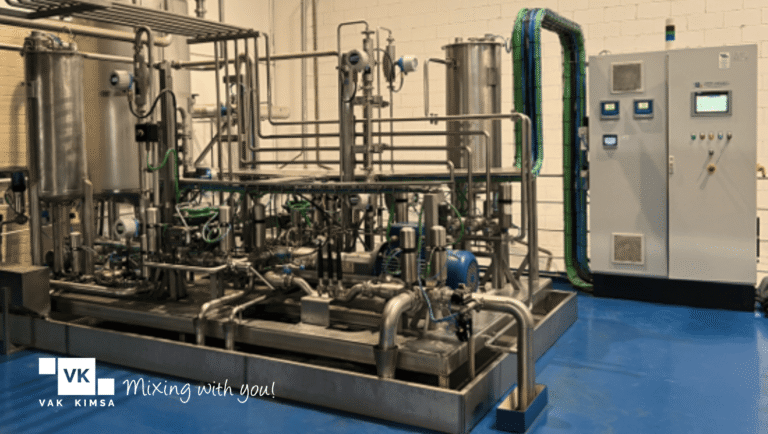
With VK Post-addition technology, 𝗶𝘁 𝗶𝘀 𝗽𝗼𝘀𝘀𝗶𝗯𝗹𝗲 𝘁𝗼 𝗰𝗼𝗻𝘁𝗶𝗻𝘂𝗼𝘂𝘀𝗹𝘆 𝗱𝗼𝘀𝗲, 𝗺𝗶𝘅 𝗮𝗻𝗱 𝗮𝗱𝗷𝘂𝘀𝘁 𝗱𝗶𝗳𝗳𝗲𝗿𝗲𝗻𝘁 𝗰𝗼𝗺𝗽𝗼𝗻𝗲𝗻𝘁𝘀 (water, concentrate and minor components) to obtain different final products 𝘄𝗶𝘁𝗵 𝗮 𝘀𝗶𝗻𝗴𝗹𝗲 𝗶𝗻𝘀𝘁𝗮𝗹𝗹𝗮𝘁𝗶𝗼𝗻.
From stored finished product to made-to-order product
The main idea is simple: not all components of a formulation have the same function.
Some ingredients are part of the common base of different products, while other elements provide the final differentiation: fragrances, colours, preservatives or other formulation adjustments.
𝗣𝗼𝘀𝘁-𝗮𝗱𝗱𝗶𝘁𝗶𝗼𝗻 𝗺𝗮𝗸𝗲𝘀 𝗶𝘁 𝗽𝗼𝘀𝘀𝗶𝗯𝗹𝗲 to separate these two concepts.
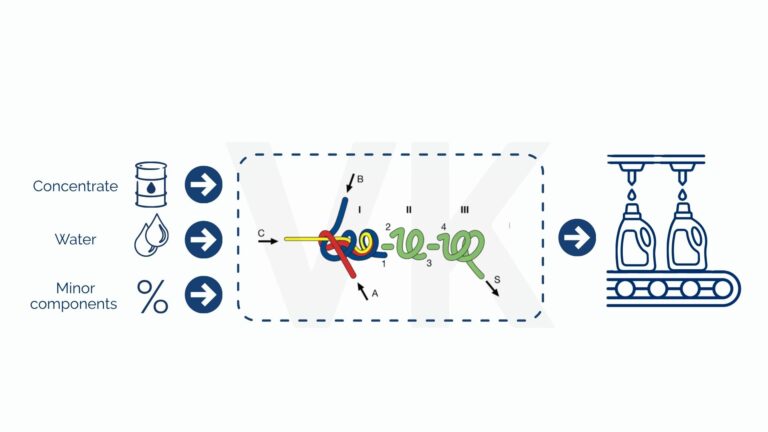
First, a concentrated intermediate is manufactured in a reactor. Then, this concentrate is continuously combined with:
• The 𝘄𝗮𝘁𝗲𝗿 needed to reach the final concentration.
• The 𝗺𝗶𝗻𝗼𝗿 𝗰𝗼𝗺𝗽𝗼𝗻𝗲𝗻𝘁𝘀 that define each SKU.
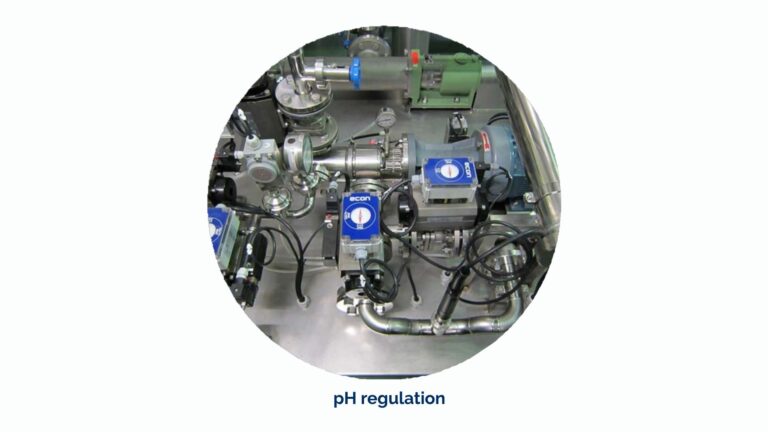
The mixture is dosed and the necessary final adjustments, such as pH, are made.
Finally, all the components are continuously mixed until the final product is obtained, which is then sent to the packaging line. 𝗧𝗵𝗲 𝗿𝗲𝘀𝘂𝗹𝘁 𝗶𝘀 𝗮 𝗺𝗼𝗿𝗲 𝗳𝗹𝗲𝘅𝗶𝗯𝗹𝗲 𝗽𝗹𝗮𝗻𝘁, 𝗯𝗲𝘁𝘁𝗲𝗿 𝗮𝗯𝗹𝗲 𝘁𝗼 𝗮𝗱𝗮𝗽𝘁 𝘁𝗼 𝗺𝘂𝗹𝘁𝗶-𝗦𝗞𝗨 𝗽𝗿𝗼𝗱𝘂𝗰𝘁𝗶𝗼𝗻.
A more flexible plant: different products from a single base
One of the great advantages of post-addition is the possibility of manufacturing different final products without needing a specific tank for each formula.
The same concentrate can give rise to different products 𝗯𝘆 𝗰𝗵𝗮𝗻𝗴𝗶𝗻𝗴 𝗼𝗻𝗹𝘆 𝘁𝗵𝗲 𝗰𝗼𝗺𝗽𝗼𝗻𝗲𝗻𝘁𝘀 𝗮𝗱𝗱𝗲𝗱 𝗰𝗼𝗻𝘁𝗶𝗻𝘂𝗼𝘂𝘀𝗹𝘆.
This allows you to:
• Change formulas more quickly.
• Manufacture large or small batches as needed.
• Respond better to variable market demand.
The plant stops being a rigid installation and becomes a more adaptable production platform.
Fewer tanks, more production capacity
Reduced storage requirements are another differentiating point.
In a traditional system, each SKU may require its own storage space. With post-addition, the same concentrate can feed different final formulations.
For example, the VK solution means that 𝗮 𝟭,𝟬𝟬𝟬-𝗹𝗶𝘁𝗿𝗲 𝗰𝗼𝗻𝗰𝗲𝗻𝘁𝗿𝗮𝘁𝗲 𝘁𝗮𝗻𝗸 𝗰𝗮𝗻 𝗴𝗲𝗻𝗲𝗿𝗮𝘁𝗲 𝘂𝗽 𝘁𝗼 𝟰𝟬,𝟬𝟬𝟬 𝗹𝗶𝘁𝗿𝗲𝘀 𝗼𝗳 𝗳𝗶𝗻𝗮𝗹 𝗽𝗿𝗼𝗱𝘂𝗰𝘁, reducing the need to hold large volumes of stored finished product.
This solution makes it possible to:
- 𝗙𝗿𝗲𝗲 𝘂𝗽 𝘀𝗽𝗮𝗰𝗲 inside the plant.
- 𝗥𝗲𝗱𝘂𝗰𝗲 𝘁𝗵𝗲 𝗻𝘂𝗺𝗯𝗲𝗿 𝗼𝗳 𝘁𝗮𝗻𝗸𝘀 required.
- I𝗻𝗰𝗿𝗲𝗮𝘀𝗲 𝘁𝗵𝗲 𝘃𝗮𝗿𝗶𝗲𝘁𝘆 𝗼𝗳 𝗽𝗿𝗼𝗱𝘂𝗰𝘁𝘀 that can be produced with the same infrastructure.
The in-line mixer: the key component of the process
In a post-addition system, the final quality of the product depends on effective, homogeneous mixing.
This is where in-line mixing technology takes centre stage.
VK systems integrate 𝗟𝗜𝗩𝗔𝗞 in-line mixers, responsible for the dilution and homogenisation of the different components during the continuous process
Unlike a traditional process based solely on residence time inside a tank, continuous mixing makes it possible to control the process at the very moment the components are incorporated.
This is especially interesting for products where uniformity, repeatability and control of final properties are critical factors.
Precise dosing and process control
VK post-addition incorporates continuous dosing systems through instantaneous flow measurement and pH regulation, ensuring that each component enters in the intended proportion.
The system can be integrated with plant control via PLC, making it possible to manage recipes, control process variables and ensure the traceability of each production run.
This automation provides:
- Repeatability between batches.
- Less dependence on manual handling.
- Greater control over the components used,
Less handling of minor components
Minor ingredients require a lot of handling. With post-addition, these components can be dosed directly from their original containers, avoiding unnecessary handling.
This simplifies the process and enables more controlled, cleaner and more orderly production.
Reduced cleaning and greater plant availability
Cleaning is an important factor in any liquid manufacturing installation.
In a traditional model, each finished-product tank involves an associated cleaning operation.
With post-addition, the need to clean large storage tanks for final product is reduced. Operations are concentrated on the concentrate reactor, the common lines and the system close to packaging.
The result:
- Less time spent on cleaning.
- Lower consumption associated with these operations.
- Greater availability of the installation.
When does it make sense to opt for post-addition?
Post-addition is especially interesting in processes with:
- High production volumes.
- A large number of final SKUs.
- Frequent formula changes.
- The need to manufacture different batch sizes.
- Limited factory space.
Each application requires a specific study of the product, viscosity, rheological behaviour and formulation in order to define the best process architecture.
It is particularly common in the 𝗱𝗲𝘁𝗲𝗿𝗴𝗲𝗻𝘁 𝗮𝗻𝗱 𝗽𝗲𝗿𝘀𝗼𝗻𝗮𝗹 𝗰𝗮𝗿𝗲 𝘀𝗲𝗰𝘁𝗼𝗿𝘀.

VK Post-addition: more flexibility, more efficiency, more future
Post-addition is not just a new mixing technology. It is a new way of organising production.
Moving from manufacturing and storing large quantities of finished product to manufacturing on demand allows plants to be more flexible, take up less space and adapt better to a market with greater product variety.
With experience in agitation, in-line mixing, helical pumps (progressive cavity pumps) and complete mixing installations, VAK KIMSA develops global solutions to help industries evolve toward more efficient production processes.
Dose. Mix. Adjust. Continuously.