The real challenge is effective temperature control
In many mixing processes, heating or cooling time does not depend solely on the power available at the jacket or heat exchanger. The determining factor is the ability of the agitation system to continuously renew the product at the vessel wall, break down thermal gradients, and maintain a homogeneous temperature throughout the entire volume.
In practice, this is what separates an adequate process from a truly optimised one.
When working with medium, high, or very high viscosity products, the challenge increases significantly. The fluid’s resistance to movement prevents thermal energy from distributing uniformly, leading to 𝗰𝗼𝗹𝗱 𝘇𝗼𝗻𝗲𝘀, 𝗵𝗼𝘁 𝘀𝗽𝗼𝘁𝘀, 𝗼𝗿 𝗶𝗻𝘀𝘂𝗳𝗳𝗶𝗰𝗶𝗲𝗻𝘁 𝗿𝗲𝗰𝗶𝗿𝗰𝘂𝗹𝗮𝘁𝗶𝗼𝗻. In these cases, having a heat exchange surface alone does not guarantee a good outcome: the mixing system must generate the appropriate flow pattern to promote heat transfer across the entire product volume.
From a technical standpoint, the thermal cycle time of a process is typically governed by five key variables:
- The rheology of the product and its evolution throughout the batch
- The vessel geometry and the ratio between impeller diameter and tank diameter
- The type of flow generated by the agitator: axial, radial, or mixed
- The operating speed and effective pumping capacity
- The system’s ability to renew the thermal boundary layer at the wall
This is where impeller selection becomes most 𝗰𝗿𝗶𝘁𝗶𝗰𝗮𝗹.
At Vak Kimsa, we offer a range of impellers and geometries suited to different viscosity ranges, pumping capacities, flow types, and process applications.
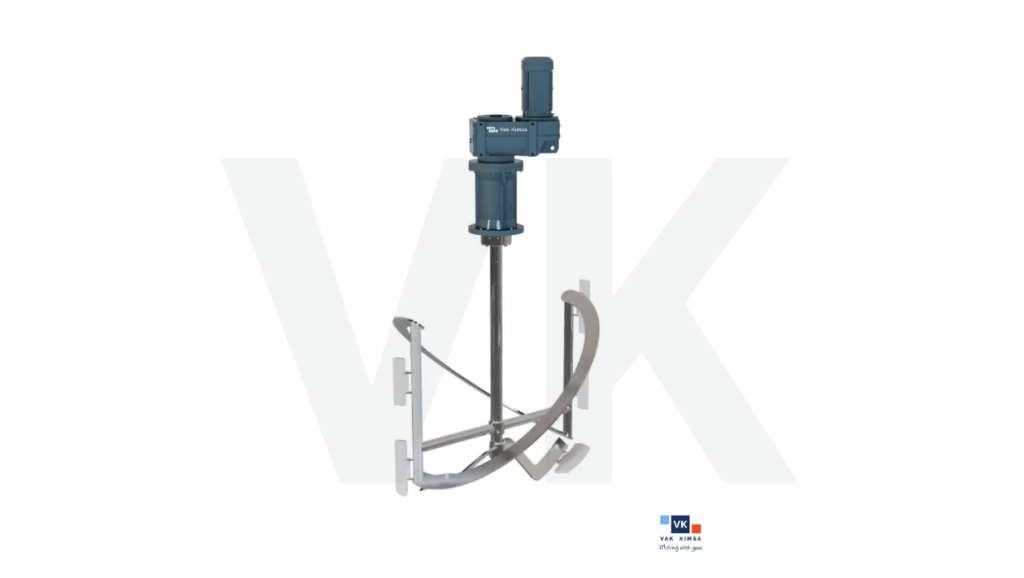
Double-motion paddle impellers operate with combined axial-radial flow, are designed for high-viscosity applications, and are our primary solution for homogenisation and blending. Anchor configurations with 𝘄𝗮𝗹𝗹 𝘀𝗰𝗿𝗮𝗽𝗲𝗿𝘀 are positioned for heat transfer applications at medium-to-high viscosities, and for very high viscosity products, counter-rotating agitators are clearly 𝘁𝗵𝗲 𝘀𝗼𝗹𝘂𝘁𝗶𝗼𝗻 𝗳𝗼𝗿 𝗯𝗼𝘁𝗵 𝗺𝗶𝘅𝗶𝗻𝗴 𝗮𝗻𝗱 𝗵𝗲𝗮𝘁 𝘁𝗿𝗮𝗻𝘀𝗳𝗲𝗿.
We must consider what the expected process behaviour will be
In viscous products, wall-proximity geometries — such as anchors, particularly with scrapers — improve product renewal at the heat exchange surface and help reduce local thermal resistance.
When the challenge combines high viscosity with the need for internal pumping and global homogenisation, mixed-flow configurations can deliver more efficient recirculation of the total volume, simultaneously improving heat exchange and batch uniformity.
As 𝗺𝗶𝘅𝗶𝗻𝗴 𝘀𝗽𝗲𝗰𝗶𝗮𝗹𝗶𝘀𝘁𝘀 𝘀𝗶𝗻𝗰𝗲 𝟭𝟵𝟳𝟮, we can confirm that reducing heating or cooling time is rarely solved by «applying more temperature» or «adding more power.» Real improvement comes from redesigning the interaction between agitation and heat transfer:
- Increasing fluid renewal at the wall
- Minimising dead zones
- Improving vertical and radial recirculation
- Matching the impeller type to the actual viscosity of the product
- Combining in-tank agitation with inline mixing when the process requires it
At this point, the role of in-line mixing also becomes relevant.
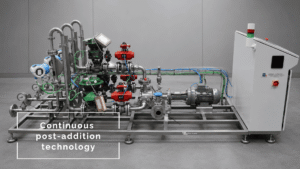
One example is the LIVAK emulsification unit, which — combined with double-motion or anchor-with-scraper agitators — enables significant reductions in batch cycle times for emulsion applications. With this approach to complex processes, thermal optimisation does not depend on a single piece of equipment, but on the integration of different mixing technologies.

Where required, the combination of 𝗶𝗻-𝘁𝗮𝗻𝗸 𝗮𝗴𝗶𝘁𝗮𝘁𝗶𝗼𝗻 + 𝗶𝗻-𝗹𝗶𝗻𝗲 𝗺𝗶𝘅𝗶𝗻𝗴 + 𝗮𝘂𝘁𝗼𝗺𝗮𝘁𝗲𝗱 𝗱𝗼𝘀𝗶𝗻𝗴 + 𝗽𝗿𝗼𝗰𝗲𝘀𝘀 𝗰𝗼𝗻𝘁𝗿𝗼𝗹 is the formula for achieving optimal results in batch manufacturing.
The most common applications our clients have requested include emulsification, pasteurisation, cooling, deaeration, as well as 𝗵𝗼𝗺𝗼𝗴𝗲𝗻𝗶𝘀𝗮𝘁𝗶𝗼𝗻, 𝗵𝗲𝗮𝘁 𝘁𝗿𝗮𝗻𝘀𝗳𝗲𝗿, and deaeration of high-viscosity sauces.
For this reason, when a process takes too long to heat or cool, the correct technical question is not simply: what thermal power do we have available?
The real question is: are we moving the product in the right way so that this energy is transferred with maximum efficiency?
Optimising thermal cycle time means optimising the process
More homogeneity, greater batch-to-batch repeatability, lower specific energy consumption, and increased production capacity.
This type of optimisation is only reliable when the system is dimensioned based on the 𝗽𝗿𝗼𝗱𝘂𝗰𝘁–𝗽𝗿𝗼𝗰𝗲𝘀𝘀 𝗽𝗮𝗶𝗿𝗶𝗻𝗴. At Vak Kimsa, we have tools such as 𝗩𝗔𝗞𝗖𝗔𝗟 for impeller sizing, 𝗔𝗡𝗦𝗬𝗦 𝗰𝗼𝗺𝗽𝘂𝘁𝗮𝘁𝗶𝗼𝗻𝗮𝗹 𝗳𝗹𝘂𝗶𝗱 𝗱𝘆𝗻𝗮𝗺𝗶𝗰𝘀 𝘀𝗶𝗺𝘂𝗹𝗮𝘁𝗶𝗼𝗻𝘀, and validation through pilot plant and industrial-scale testing platforms.
If you would like to explore how we approach mixing and heat transfer optimisation from a holistic process perspective, contact us and we will get to work!