Industrial Sourdough Preparation: Two Mixing Challenges, Two Solutions
Dispersing flours, incorporating difficult ingredients and maintaining homogeneity during fermentation are common challenges in industrial sourdough production.
World Bread Day is celebrated on October 16. Established in 2006 by the International Union of Bakers and Pastry Chefs, it falls on the same day as World Food Day (proclaimed by the FAO) for a reason: it recalls the importance of this staple food in global nutrition and the fight against hunger.
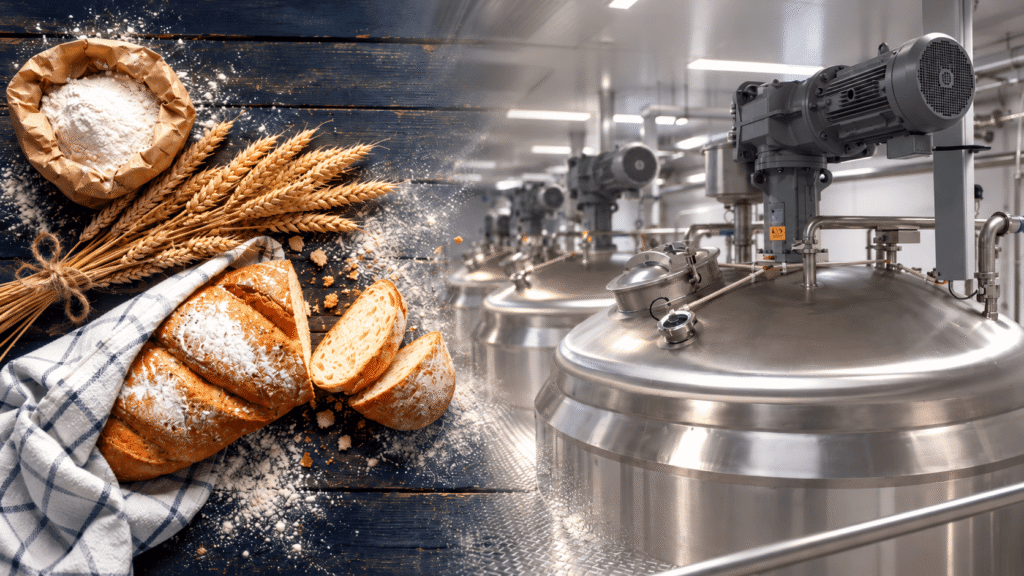
To make bread, you have to mix.
Current formulations can contain up to 60% flour, as well as bran, fibers, gluten, enzymes, bacterial cultures and other functional ingredients, such as xanthan gum.
Achieving a homogeneous mix with these ingredients is not always easy. The high concentration of solids, the viscosity of the product and the tendency of some components to form lumps require mixing technologies adapted to each stage of the process.
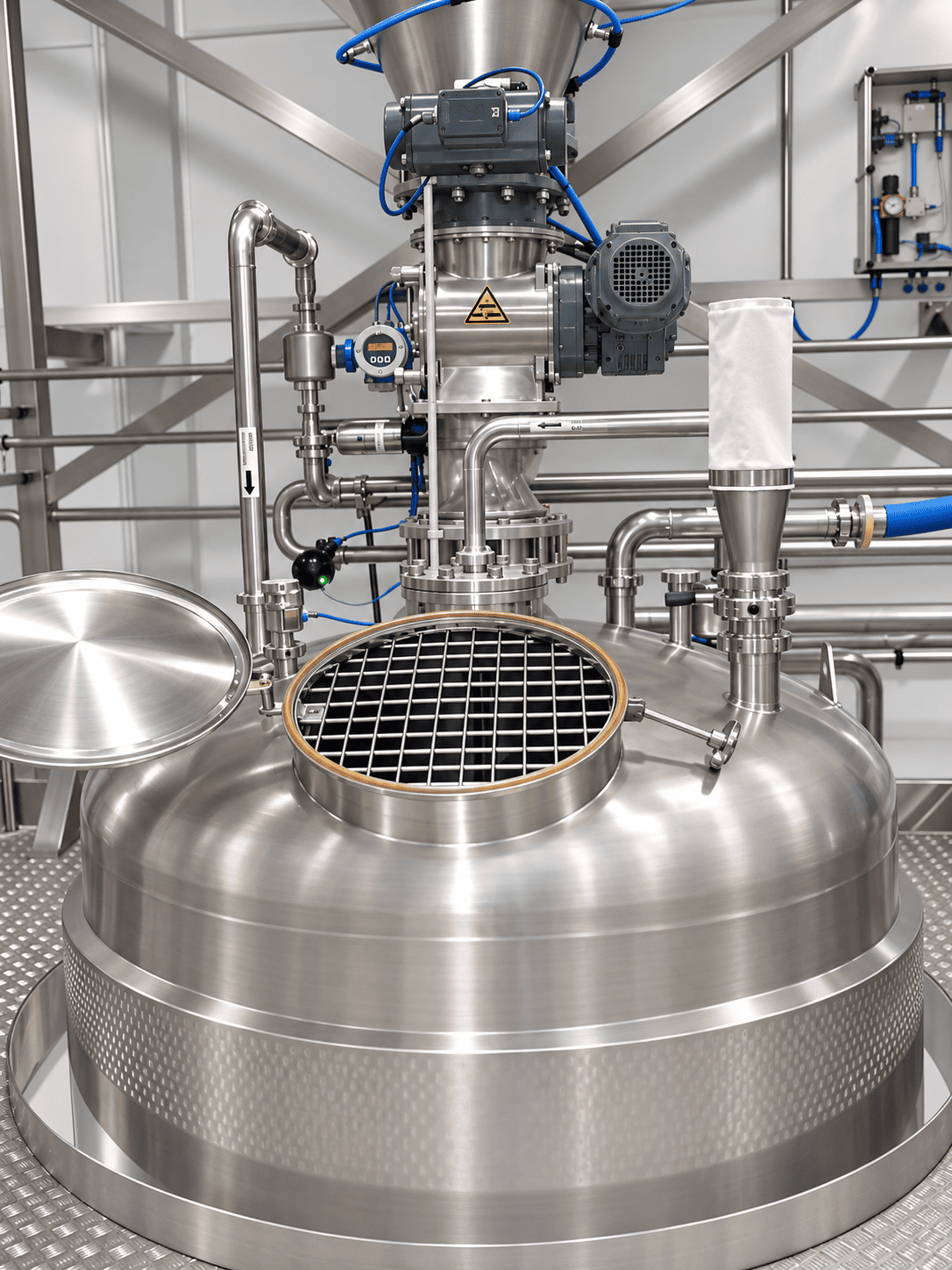
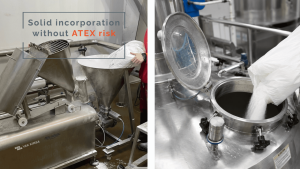
Flour inlet – sourdough agitation tank
The first challenge: dispersing large quantities of flour without heating the product
During sourdough preparation, adding flour to the liquid medium can cause the formation of lumps that are difficult to eliminate.
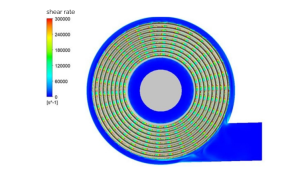
To achieve a homogeneous dispersion, intense shear must be applied, but with the temperature increase controlled to avoid undesired alterations of the product, such as premature gelation.
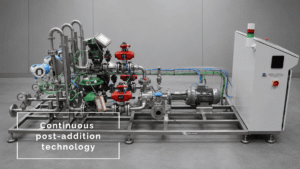
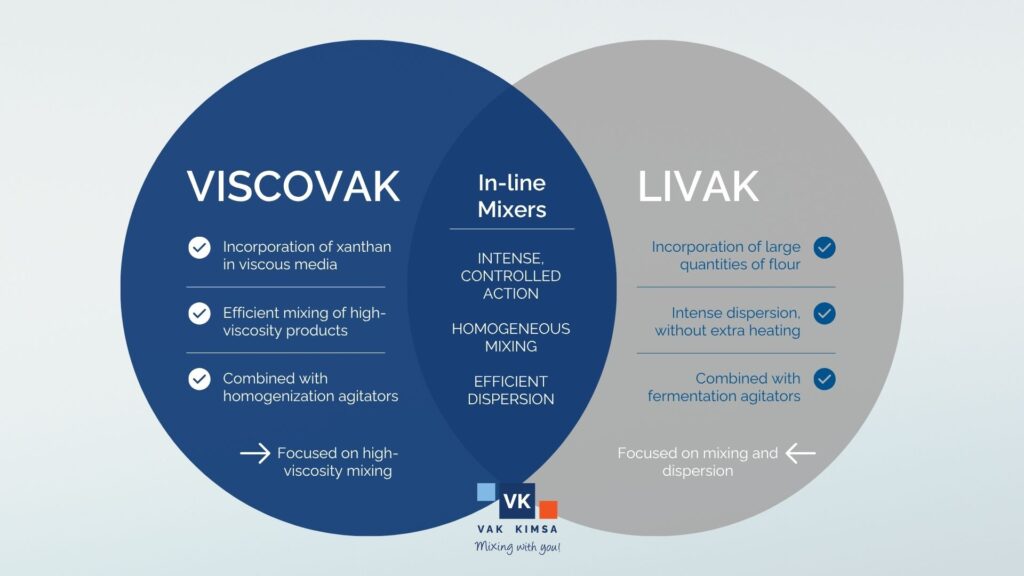
Our solution combines the LIVAK in-line mixer with fermentation agitators.
The LIVAK makes it possible to incorporate large flows of solids and obtain a homogeneous, lump-free dispersion, working with viscosities of up to 20,000 cP.
Once the mixture is prepared, the fermentation agitators provide gentle, controlled movement, maintaining homogeneity without subjecting the product to unnecessary shear.
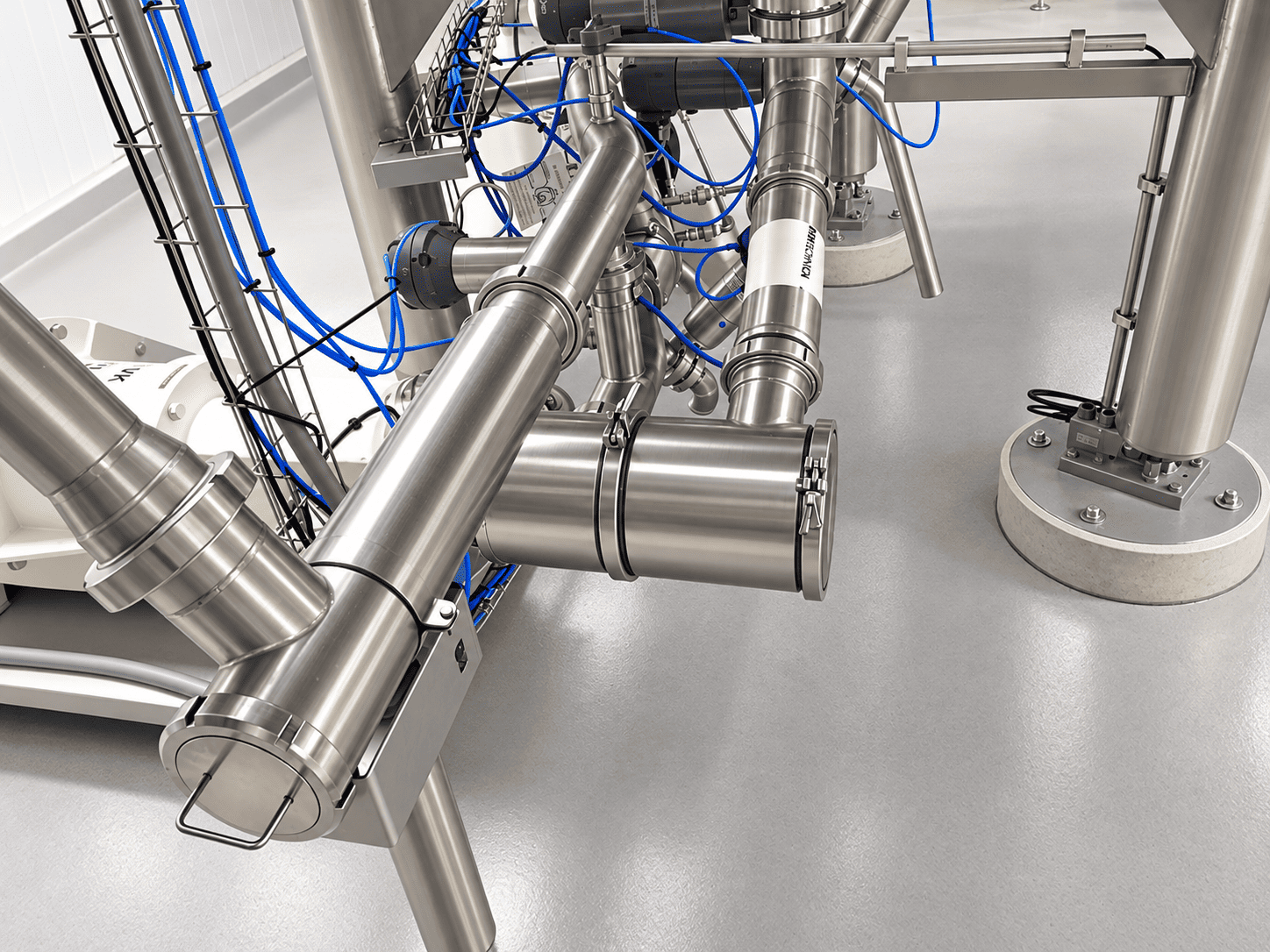
LIVAK under the tank – sourdough production
The second challenge: incorporating xanthan into a viscous sourdough
Xanthan gum is used in food formulations to modify viscosity and improve the rheological properties of the product.
However, its high affinity for water means it hydrates quickly and can form agglomerates that are difficult to disperse, especially when added directly to a sourdough that already has a high viscosity.
Under these conditions, conventional agitation systems may struggle to achieve a uniform distribution of the xanthan.
For this application, we propose the VISCOVAK in-line mixer, combined with homogenization agitators.
The VISCOVAK is specially designed for the treatment of viscous products, providing an intense and effective mixing action that facilitates the dispersion of ingredients and the achievement of a homogeneous texture.
The agitators complement this stage by maintaining the uniformity of the product inside the tank.
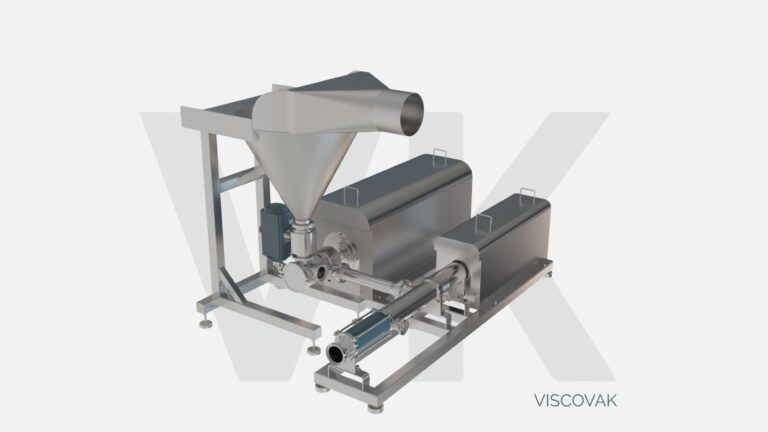
The right mixing technology for each process
Although the two applications share similar difficulties, each requires a specific mixing strategy.
The LIVAK addresses the need to incorporate and disperse large quantities of flour, while the VISCOVAK makes it possible to tackle viscous formulations with ingredients that are difficult to incorporate, such as xanthan gum.
In both cases, the combination of in-line mixers and agitators, with equipment designed to facilitate CIP cleaning, contributes to more homogeneous, efficient and reproducible processes.
At VAK KIMSA we understand that good mixing is not simply a matter of agitating more, but of applying the right technology at each stage of the process.